Hair Dryer vs Air Dry: Which Is Actually Better for Your Hair?
Lip Store.euShare
If you have ever been told that air drying is always better for your hair than using a blow dryer, you have been given an incomplete answer. The hair dryer vs air dry debate is not a simple question of heat versus no heat — it involves hair structure, moisture exposure, protein degradation, and styling outcomes that differ significantly depending on your hair type, your tools, and your technique. Understanding the real science behind this question will change how you approach drying your hair permanently.
What Happens to Hair When It Dries — With or Without Heat
Hair is at its most vulnerable when it is wet. The water molecules penetrate the cortex, causing the hair shaft to swell significantly — a process called hygral expansion. This temporary swelling stresses the protein bonds within the cortex, and repeated cycles of swelling and drying cause a cumulative form of structural weakening known as hygral fatigue. The longer hair stays wet, the more exposure time the cortex has to hygral stress.
This means that air drying — while it involves no direct heat — is not automatically gentle. Leaving wet hair in a swollen state for extended periods causes its own form of damage, particularly for fine, damaged, or high-porosity hair that absorbs water rapidly and releases it slowly. The assumption that air drying is the safe default is one of the most common misconceptions in hair care.
The Case Against Air Drying: What the Science Shows
A study published in the Annals of Dermatology found that while blow drying at close distance caused more surface damage to the cuticle, hair that was air dried showed significantly more cortex damage due to prolonged swelling. The conclusion drawn by researchers was that blow drying at a proper distance and temperature — combined with continuous movement — resulted in less total damage than air drying alone.
The cortex is where the structural integrity of the hair lives. Cuticle damage affects texture and shine; cortex damage affects strength, elasticity, and the hair's ability to hold its shape. From a structural standpoint, protecting the cortex from extended moisture exposure is as important as protecting the cuticle from heat.
The Case Against Blow Drying: Where the Risk Comes From
Blow drying becomes genuinely damaging when it is performed incorrectly. The primary risk factors are excessive heat, insufficient distance, static airflow concentrated on one section, and the complete absence of a heat protectant. Under those conditions, the cuticle can crack, surface moisture evaporates too rapidly, and the strand becomes brittle and prone to breakage.
The key distinction is this: it is not the blow dryer that damages hair — it is the improper use of the blow dryer. A high-quality tool used at the correct distance, with appropriate heat settings, continuous movement, and proper product preparation, does not produce the same outcome as a cheap dryer held stationary at maximum heat.
When Air Drying Is the Better Choice
Air drying is advantageous in specific circumstances. When time permits and the hair does not need to be styled, air drying is a valid rest from heat exposure — particularly for hair that undergoes frequent thermal styling throughout the week. The key is to minimize the wet phase: remove as much water as possible with a microfiber towel or cotton T-shirt before allowing the hair to air dry, and avoid lying down, sleeping, or tying hair up while it is still wet.
- Air drying is appropriate for rest days between heat styling sessions
- It is better suited to thick, low-porosity hair that absorbs water slowly and retains moisture well
- It is not recommended as the default method for fine, high-porosity, or already-damaged hair
- Never sleep on wet hair — the combination of friction, pressure, and prolonged swelling causes significant overnight damage
When Blow Drying Is the Better Choice
Blow drying is the professional-grade default for most hair types and situations. It reduces the cortex's exposure to hygral stress, gives stylists and consumers full control over the final result, and when done correctly causes less cumulative structural damage than extended air drying. For fine hair, damaged hair, or hair that has been recently treated chemically, blow drying is often the safer option precisely because it shortens the vulnerable wet phase.
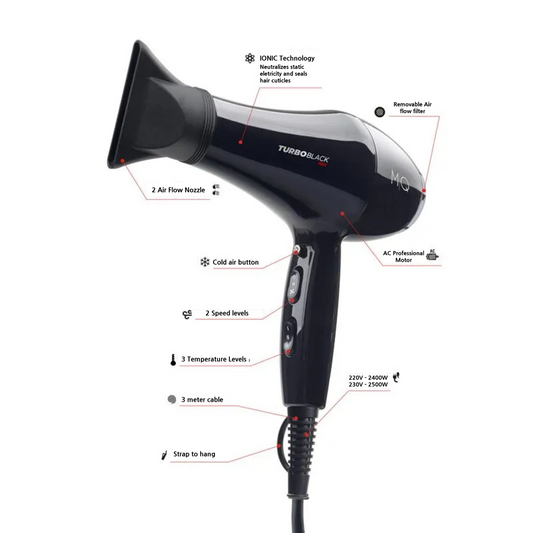
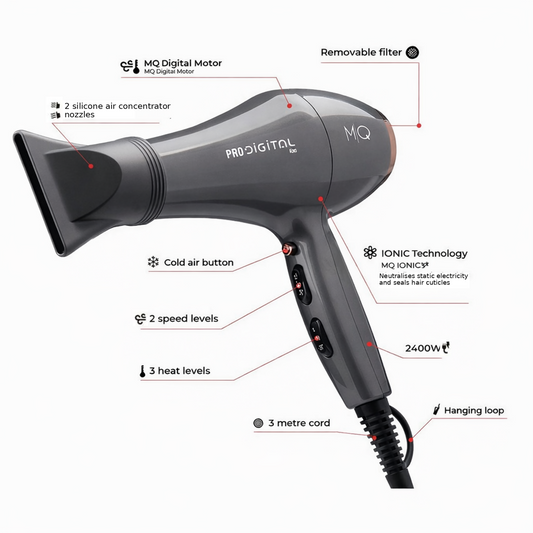
Using professional hair dryers with ionic technology significantly improves the outcome. Ionic dryers emit negatively charged ions that break down water molecules faster, reducing drying time and sealing the cuticle in the process. The result is a smoother, shinier finish with less heat exposure needed overall — a better result by every metric than air drying or using a conventional consumer dryer.
- Blow drying is superior for fine, damaged, or high-porosity hair
- It is the correct choice before any heat styling service — flat ironing or curling damp hair causes severe bubble hair damage
- It gives full control over volume, direction, and smoothness of the final result
- With ionic technology, it reduces static, seals the cuticle, and produces a professional-level finish
The Role of Heat Protection in Blow Drying
The single most important variable in making blow drying safe is heat protection. A quality heat protectant applied to towel-dried hair before blow drying creates a thermal barrier that distributes heat more evenly across the strand, preventing localized overheating and cuticle damage. It also helps maintain moisture balance during the drying process, so the strand does not become brittle before styling is complete.
Using a professional heat protection product rated for your dryer's temperature is not an optional step — it is what separates damaging blow drying from professional blow drying. Apply it to each section before drying, allow it to distribute evenly, and always keep the dryer moving to avoid concentrating heat in one location.
- Apply heat protection to every section before the dryer touches it
- Use the concentrator nozzle attachment to direct airflow and reduce frizz
- Set the dryer to medium heat and finish each section with a cool shot to close the cuticle
- Keep the dryer at least 15–20 cm from the hair surface at all times
The Professional Verdict: Hair Dryer or Air Dry?
Professional stylists do not default to air drying. The salon standard — for good reason — is a controlled blow dry that combines the right tool, the right temperature, heat protection, and a consistent technique. This approach consistently produces better structural outcomes, better aesthetic results, and more predictable styling than air drying can offer.
Air drying has its place as a rest-day practice for those who already use heat styling frequently. But for anyone seeking consistent, healthy, professionally styled hair — whether at home or in the salon — a well-executed blow dry with a professional dryer and proper preparation is the superior choice in almost every scenario.
Frequently Asked Questions
Is air drying or blow drying better for hair health?
Neither is categorically better — both methods involve a form of stress to the hair. Air drying causes hygral fatigue from prolonged swelling; blow drying causes surface heat stress. However, research shows that a blow dry performed at the correct temperature, distance, and with heat protection causes less total damage to the cortex than extended air drying. For most hair types, a properly executed blow dry is the healthier long-term option.
Does air drying cause hair damage?
Yes, particularly for fine or high-porosity hair. Extended exposure to moisture causes the hair shaft to swell repeatedly, which weakens the internal protein bonds over time — a process called hygral fatigue. The risk increases significantly if hair is tied up, slept on, or manipulated while still wet. Reducing the wet phase by blotting with a microfiber towel before air drying minimizes this risk.
How can I blow dry my hair without causing damage?
Apply a heat protectant to towel-dried hair before blow drying. Use a professional dryer with ionic technology set to medium heat. Keep the dryer at 15–20 cm from the hair and keep it moving continuously. Work in sections from the bottom up. Finish each section with a cool shot to seal the cuticle. Never blow dry soaking wet hair — remove as much water as possible with a microfiber towel first.
Is it better to air dry hair before blow drying?
Partially, yes. Removing excess water with a microfiber towel before blow drying — to a damp but not dripping state — reduces the total heat exposure needed to dry the hair completely. This shortens drying time and reduces thermal stress. However, allowing hair to air dry significantly before blow drying defeats the purpose, as the cortex will have already undergone prolonged hygral expansion during the air drying phase.
What type of hair dryer is best for minimizing damage?
A professional ionic hair dryer is the best option for minimizing damage. Ionic technology breaks down water molecules faster, shortening drying time and reducing the total heat exposure the hair receives per session. This produces smoother results with less frizz, better cuticle sealing, and a significantly lower risk of heat damage compared to conventional non-ionic dryers.