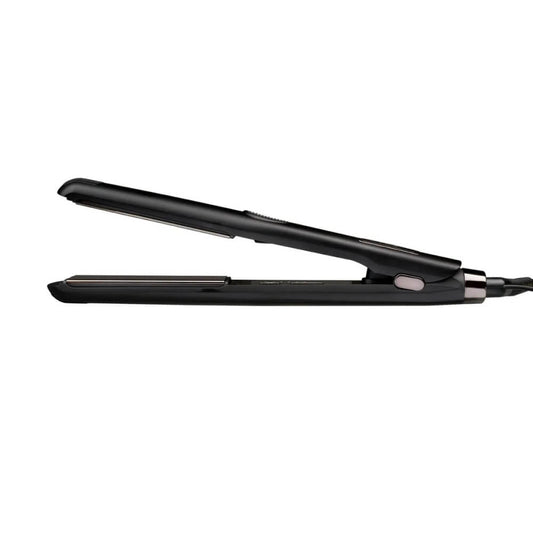
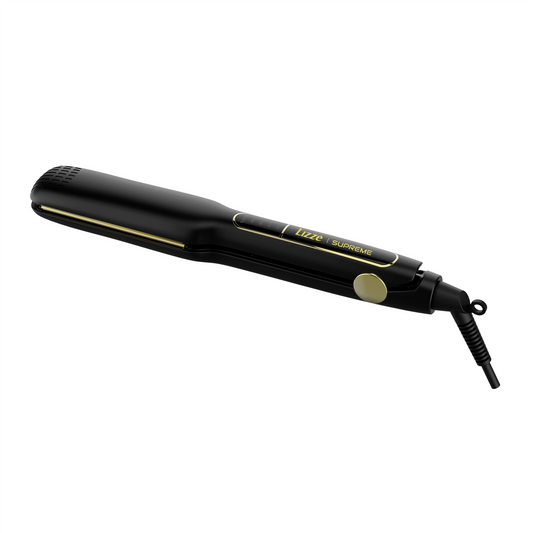
How to Use a Hair Straightener Without Damage: The Professional Method
Lip Store.euShare
Most people who use a hair straightener regularly are unknowingly causing progressive, cumulative damage to their hair — and the worst part is that it happens silently, long before split ends and breakage become visible. Learning how to use a hair straightener without damage is not complicated, but it requires understanding what heat actually does at the structural level and applying a consistent technique that protects your hair every single time.
Why Hair Straighteners Cause Damage in the First Place
A flat iron works by pressing heated plates against the hair shaft and using sustained pressure and heat to temporarily break and reform the hydrogen bonds that determine hair shape. This process, when performed at the wrong temperature, on unprepared hair, or with poor-quality tools, causes the cuticle to crack, the cortex to dehydrate, and the protein structure to deteriorate — producing the dryness, frizz, and breakage that most people attribute simply to bad hair.
The key insight is this: it is not the act of straightening that damages hair. It is the combination of incorrect temperature, lack of preparation, and repeated mechanical stress without recovery. Remove those variables and straight, shiny, healthy hair becomes achievable — even with frequent styling.
Step 1 — Start with Clean, Properly Conditioned Hair
Never straighten hair that is dirty, product-laden, or excessively dry. Buildup on the hair surface acts as an insulating layer that traps heat unevenly, creating localized hot spots that burn the cuticle. Begin every session with clean hair that has been washed with a sulfate-free or smoothing shampoo and conditioned with a formula appropriate for your hair type.
- Sulfate-free shampoos preserve the hair's natural moisture barrier before heat styling
- A lightweight conditioner is essential even for fine hair — it adds slip and reduces breakage during detangling
- Avoid silicone-heavy products immediately before straightening if you plan to use a serum after — layering too many heavy formulas creates buildup
Step 2 — Dry Hair Completely Before Applying Heat
This is one of the most critical and most overlooked rules in heat styling. Applying a flat iron to damp or wet hair causes a phenomenon known as bubble hair — the water inside the cortex superheats, turns to steam, and creates microscopic bubbles that weaken the internal structure and cause the strand to become extremely brittle. The damage from a single pass of a flat iron over wet hair can be more severe than weeks of heat exposure on properly dried hair.
- Always blow dry or air dry hair to at least 95% dryness before straightening
- Use a blowout as the first styling step — this also reduces total flat iron passes needed
- If time is limited, use a blow dryer on low heat with a concentrator nozzle rather than reaching for the flat iron on damp hair
Step 3 — Apply Heat Protection Before Every Session
There is no safe way to straighten hair without a heat protectant. This is not a preference — it is a structural necessity. A quality protectant creates a barrier between the plates and the hair shaft that absorbs and redistributes thermal energy, preventing the cuticle from cracking under direct contact with a surface that may reach 220°C or above.
A professional heat protection spray or cream rated for your specific flat iron temperature is the single most important product in your straightening routine. Apply it to dry or towel-dried hair, ensure even distribution from mid-lengths to ends, and allow it to fully absorb before touching a hot plate to the strand.
- Match the protectant's rated temperature to your flat iron's maximum setting
- Apply in sections — a rushed, uneven application leaves some areas completely unprotected
- Do not skip this step even if you are in a hurry — one unprotected session can set back weeks of hair recovery
Step 4 — Set the Correct Temperature for Your Hair Type
Temperature is where most people make their biggest mistake. The instinct is to use the highest heat available to achieve faster, longer-lasting results. The reality is that using a higher temperature than necessary exponentially increases damage without proportionally improving results. Each hair type has an optimal range that delivers effective straightening with minimal structural compromise.
- Fine or damaged hair: 150–170°C — fine hair has less mass to absorb heat and reaches damaging temperatures almost instantly
- Normal or medium hair: 170–190°C — this range achieves smooth results efficiently without excessive stress
- Thick, coarse, or resistant hair: 190–220°C — this type requires higher heat but should never exceed 220°C even with protection
- Color-treated or bleached hair: Stay at the lowest effective temperature — chemical processing has already weakened the cuticle significantly
Step 5 — Master the Technique: Speed, Tension, and Sections
The technique used during straightening determines as much as the temperature. Three variables control the outcome: the size of each section, the speed of the pass, and the tension applied. Each one affects how much heat the strand absorbs and how much mechanical stress is placed on the fiber.
- Section size: Thin sections (1–2 cm wide) require fewer passes and transfer heat more efficiently — thick sections trap heat unevenly
- Pass speed: Move the iron smoothly and continuously — never clamp and hold in one place for more than 2–3 seconds
- Tension: Apply light, consistent tension with the comb or fingers — excessive pulling stresses the follicle and weakens the strand
- Number of passes: One to two passes per section is the professional standard — more than three passes on the same section indicates incorrect temperature or section size
Step 6 — Finish with a Serum to Seal and Protect
Once the straightening is complete, the cuticle is open from the heat and needs to be sealed immediately. A finishing serum applied to the lengths and ends accomplishes three things simultaneously: it seals the cuticle, locks in the result of the styling, and adds the reflective surface shine that distinguishes professionally straightened hair from a basic flat iron job.
Applying a professional hair serum while the hair is still slightly warm from styling maximizes absorption and creates a lasting protective layer that resists humidity, friction, and environmental aggressors throughout the day. Use a small amount — work it through the lengths and ends, avoiding the roots to prevent greasiness.
- Apply serum immediately after straightening while hair is still warm
- Distribute from mid-lengths to ends using your palms — avoid touching the roots
- A pea-sized amount is sufficient for medium-length hair — increase slightly for longer or thicker hair
Common Mistakes That Cause Straightener Damage
Even with the right products and tools, avoidable technique errors are responsible for a significant portion of heat styling damage. The following are the most frequent mistakes made by both consumers and less experienced salon professionals.
- Straightening the same section multiple times: If the result isn't smooth after two passes, the issue is temperature or section size — not the number of passes
- Using a flat iron on extensions or wigs without checking compatibility: Synthetic fibers melt at standard styling temperatures — always verify heat tolerance
- Leaving the iron stationary on the hair: Even two seconds too long at high temperatures causes a visible burn mark and irreversible structural damage
- Straightening every day without a recovery protocol: Even with perfect technique, daily heat styling demands a weekly deep conditioning treatment to replenish what heat removes
- Using a low-quality flat iron with ceramic plates that chip or have uneven heat: Plate quality directly determines damage — this is not an area to compromise on
Frequently Asked Questions
How often can I use a hair straightener without causing damage?
With the correct technique, proper heat protection, and a temperature matched to your hair type, straightening 2–3 times per week is manageable for most hair types. Daily straightening is possible for those with thick or coarse hair who follow a consistent conditioning protocol, but it is not advisable for fine, damaged, or color-treated hair without expert guidance.
What is the best temperature to use a flat iron without damaging hair?
The best temperature is the lowest one that achieves the desired result for your specific hair type. For fine hair, this is 150–170°C. For normal hair, 170–190°C. For thick or resistant hair, up to 220°C. Going higher than necessary for your hair type is the single most common cause of preventable heat damage.
Can I straighten my hair without heat protection if I use a low temperature?
No. Even at lower temperatures, the flat iron still subjects the hair to direct mechanical pressure combined with sustained heat — a combination the unprotected cuticle cannot safely absorb repeatedly. Heat protection is mandatory at every temperature level, not only at high settings.
Does using a hair serum after straightening help prevent damage?
A serum does not prevent damage that occurs during the straightening process — that is the job of heat protection applied before. However, a post-styling serum seals the cuticle, locks in moisture, and protects the result from humidity and environmental stress, which directly extends the lifespan of the straightening result and reduces the frequency of restyling needed.
Why does my hair still frizz after straightening even when I use a flat iron?
Post-straightening frizz is almost always caused by one of three factors: residual moisture in the hair before straightening began, the use of a flat iron at a temperature too low for your hair's porosity, or lack of a sealing product applied immediately after. Address all three — ensure complete dryness, use the correct temperature for your hair type, and apply a serum the moment straightening is complete.