Best Hair Dryer for Damaged Hair: The Complete Professional Guide
Lip Store.euShare
Finding the best hair dryer for damaged hair is one of the most important decisions you can make for the long-term health, strength, and appearance of your hair. Damaged hair — whether from chemical processing, heat overuse, or environmental stress — requires a fundamentally different approach to drying than healthy hair. Use the wrong tool, and you accelerate breakage, frizz, and dullness. Use the right one, and you actively support the hair's recovery with every blowout.
Whether you are a salon professional working with chemically treated clients or a consumer rebuilding hair health at home, understanding what separates a damaging dryer from a genuinely restorative one is the first step toward better results.
Why the Wrong Hair Dryer Makes Damaged Hair Worse
Damaged hair has a compromised cuticle layer — the outermost protective structure of each strand. When the cuticle is lifted, cracked, or stripped, hair becomes highly porous, absorbing moisture unevenly and losing it just as quickly. Applying excessive heat to already-compromised hair disrupts this process further, causing protein degradation, moisture loss, and increased mechanical stress on fragile strands.
The most common mistakes with hair dryers on damaged hair include using maximum heat settings, holding the dryer too close to the hair, skipping heat protection, and using outdated technology that distributes heat unevenly. The result is hair that looks and feels progressively worse with every styling session — a cycle that only worsens without the right intervention.
What to Look for in the Best Hair Dryer for Damaged Hair
Not all hair dryers are engineered with hair health in mind. When selecting a dryer for damaged or fragile hair, the technology behind the tool matters as much as the brand name on the label. Here are the key features that define a truly hair-safe dryer:
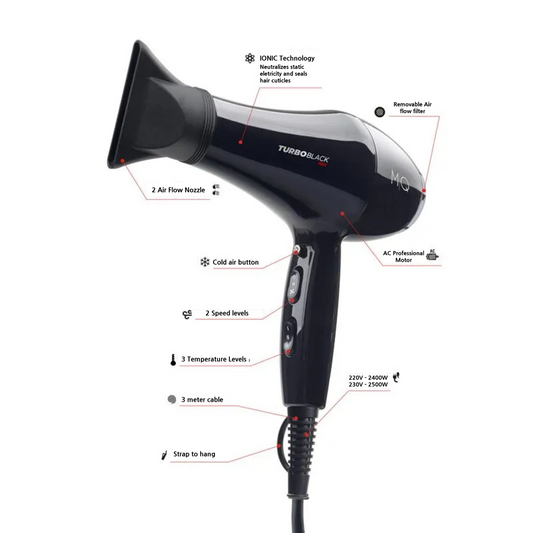
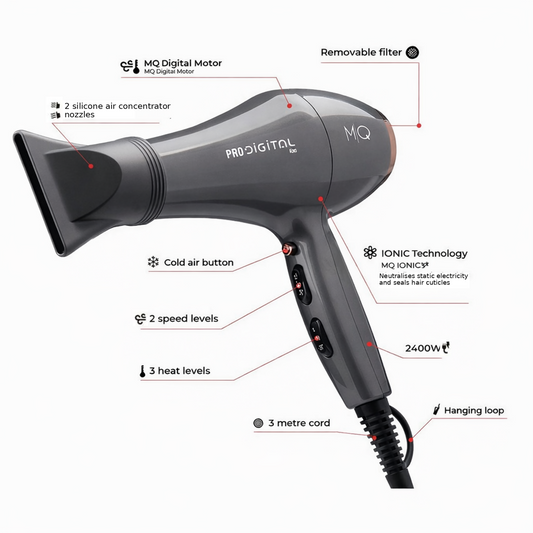
- Ionic technology: Ionic dryers emit negatively charged ions that break down water molecules faster, significantly reducing the drying time and therefore the total heat exposure the hair undergoes — a critical advantage for damaged hair
- Multiple heat and speed settings: Damaged hair should never be dried on maximum heat; a dryer with at least three heat settings and a dedicated cool-shot button gives you precise control over the thermal load applied to fragile strands
- Far-infrared heat technology: Far-infrared heat dries the hair from the inside out, rather than burning the surface of the strand — this results in a gentler drying process that preserves moisture and reduces surface damage
- Wattage between 1800W and 2200W: Lower wattage means longer drying time and prolonged heat exposure; higher-wattage professional dryers dry faster with less sustained thermal stress, which is paradoxically safer for damaged hair
- Diffuser attachment: For wavy and curly damaged hair, a diffuser distributes airflow gently and evenly, reducing the mechanical friction that causes breakage and frizz
- Concentrator nozzle: A precision concentrator allows you to direct airflow exactly where it's needed, minimizing exposure to surrounding sections and enabling smooth, controlled blow-drying with less heat
- Cool shot function: Finishing the blowout with a blast of cool air seals the cuticle, locking in shine and reducing post-drying frizz — essential for damaged hair that struggles to close its cuticle independently
Ionic vs. Ceramic vs. Tourmaline: What the Technology Actually Means
The professional hair care market is saturated with technology claims, and for someone with damaged hair, understanding what each technology actually delivers is essential for making an informed purchase decision.
Ionic technology refers to the emission of negative ions during drying. These ions neutralize the positive charge that builds up in dry, damaged hair — reducing static, smoothing the cuticle, and accelerating moisture evaporation so that less heat is needed overall. For damaged hair, this is the single most impactful technology available in a hair dryer.
Ceramic technology involves either ceramic components in the heating element or a ceramic-coated barrel. Ceramic heats evenly and gently, eliminating the hot spots that cheap resistance-wire dryers produce and that are particularly devastating for weakened hair. A pure ceramic dryer produces consistent, diffused heat that is significantly safer than conventional alternatives.
Tourmaline is a semi-precious stone that, when crushed into the dryer's components, generates negative ions naturally and at a higher volume than standard ionic dryers. Tourmaline dryers are among the most protective technologies available for damaged hair, combining ionic output with ceramic's even-heat distribution to produce a drying experience that is both efficient and genuinely gentle.
Professional vs. Consumer Hair Dryers: Which Is Right for Damaged Hair?
The gap between a professional-grade hair dryer and a consumer model is not just a matter of price — it reflects fundamentally different engineering priorities. Professional dryers are built for sustained use, precise heat control, consistent airflow, and long-term performance under salon conditions. These qualities make them particularly valuable for damaged hair, where precision and consistency are non-negotiable.
Professional dryers typically offer a wider range of heat settings, more powerful motors that reduce drying time, better-engineered airflow that reduces turbulence and mechanical stress on the hair, and more durable components that maintain their performance over years of daily use. For salon professionals managing multiple clients with damaged or chemically treated hair, investing in a professional-grade dryer is not optional — it is a foundation of quality service delivery.
Consumer-grade dryers have improved significantly and many now incorporate ionic and ceramic technologies. However, for heavily damaged, bleached, or chemically processed hair, the precision and consistency of a professional tool remain the benchmark. Understanding how your styling tools affect the overall condition of your hair is part of building a complete professional toolkit — something explored in depth in this expert guide to the best tools for professional hair styling.
Heat Settings and Temperature Control: The Most Critical Factor
Of all the specifications to consider when choosing a hair dryer for damaged hair, temperature control is the single most important. Hair protein — keratin — begins to degrade at sustained temperatures above 150°C, and the cuticle of damaged hair, already compromised, is significantly more vulnerable to thermal stress than healthy hair.
The ideal approach for drying damaged hair is to begin with medium heat and medium airflow to remove the bulk of moisture, then transition to a lower heat setting to refine the style, and finish with the cool-shot function to seal the cuticle and lock in smoothness. This graduated approach minimizes the total thermal load on the hair while still achieving professional results.
Dryers with digital temperature displays and precise degree-by-degree control — increasingly available in professional-tier models — represent the pinnacle of safe heat styling for damaged hair. They remove guesswork entirely and allow you to apply exactly the thermal input needed, no more and no less.
The Role of Heat Protection When Using Any Hair Dryer
Even the best hair dryer for damaged hair cannot fully compensate for the absence of a quality heat protectant. Heat protectants form a thermal barrier over the hair shaft before drying, reducing the direct thermal load on the cuticle and helping to lock in moisture during the drying process. For damaged hair, skipping this step is never optional — it is one of the most consequential decisions you can make at the styling stage.
The most effective heat protectants for damaged hair are lightweight serums or sprays that penetrate the cortex rather than simply coating the surface. They should be silicone-enhanced for surface protection, contain hydrolyzed proteins to temporarily reinforce the hair structure, and be heat-activated up to at least 230°C to offer genuine protection across the full temperature range of professional dryers. To fully understand the science behind heat protection and when it is truly non-negotiable, read this professional truth about heat protection for your hair.
To Blow-Dry or to Air-Dry: The Real Answer for Damaged Hair
The debate between blow-drying and air-drying is more nuanced than most consumers realize, and for damaged hair specifically, the answer is not as straightforward as "air-dry is always safer." In fact, prolonged air-drying keeps the hair shaft in a swollen, wet state for an extended period, during which the hair is at its most structurally vulnerable and most susceptible to mechanical breakage from normal movement and friction.
The correct approach for damaged hair is to air-dry to approximately 70–80% dryness, then use a low-to-medium heat setting on a high-quality ionic or infrared dryer to finish. This hybrid method reduces total heat exposure while avoiding the prolonged swelling that extended air-drying causes. For a complete breakdown of the evidence on both sides of this debate, this expert comparison of hair dryer vs. air-dry covers everything you need to know.
Blow-Drying Technique for Damaged Hair: Professional Best Practices
The most advanced hair dryer delivers poor results when used with poor technique. For damaged hair, the following professional practices are non-negotiable:
- Always apply heat protectant to towel-dried hair before any heat styling — on damp hair, not soaking wet, to allow even distribution and optimal absorption
- Maintain at least 15 cm distance between the dryer nozzle and the hair at all times — closer proximity dramatically increases the surface temperature and the risk of thermal damage
- Keep the dryer moving continuously — holding the dryer stationary concentrates heat on one section, raising the local temperature to levels that damaged hair cannot tolerate
- Direct airflow downward along the hair shaft — this follows the natural direction of the cuticle scales and produces a smoother, shinier result with less friction
- Use a natural bristle or mixed-bristle round brush for controlled blow-drying — synthetic bristles generate static and friction that are particularly harmful to compromised hair
- Finish with the cool-shot button on every section — this step is essential for sealing the cuticle and locking in the smoothness achieved during drying
- Avoid stretching or pulling damaged hair under tension while blow-drying — wet damaged hair has significantly reduced elasticity and is highly susceptible to mechanical breakage under tension
Frequently Asked Questions
What is the best hair dryer for damaged hair?
The best hair dryer for damaged hair combines ionic and ceramic or tourmaline technology, offers multiple precise heat settings including a low-heat option, features a cool-shot function, and delivers professional-grade airflow control. Far-infrared heat dryers represent the most advanced option for compromised hair, drying from the inside out to minimize surface damage while maximizing efficiency.
Is it better to air-dry or blow-dry damaged hair?
Neither extreme is optimal for damaged hair. Prolonged air-drying keeps hair in a structurally vulnerable swollen state, while aggressive blow-drying on high heat compounds existing damage. The best approach is to allow hair to air-dry to 70–80% dryness, then finish with a quality ionic dryer on a low-to-medium heat setting with a heat protectant applied beforehand.
What temperature should I use to blow-dry damaged hair?
Damaged hair should be dried at temperatures between 130°C and 150°C — significantly lower than the 180–230°C typically used on healthy hair. If your dryer does not have precise temperature control, use the lowest or medium heat setting and always finish with the cool-shot function to seal the cuticle before moving to the next section.
Do I really need heat protection when using a hair dryer on damaged hair?
Yes — without exception. Even the most advanced ionic or infrared dryer still applies heat to the hair, and damaged hair has a compromised cuticle that offers significantly less natural protection than healthy hair. A quality heat protectant is not optional for damaged hair; it is the most critical pre-styling step in any blow-dry routine.
Can a good hair dryer help repair damaged hair?
A high-quality hair dryer does not repair damage in the way a conditioning treatment does, but it does prevent further damage from occurring during the drying process — and preventing new damage is the single most important factor in any hair recovery plan. Combined with the right aftercare products, heat protection, and a restorative treatment such as a professional keratin system, using the correct dryer can make a measurable difference in the trajectory of damaged hair's recovery.