Ionic vs Ceramic Hair Dryer: Which Technology Is Better?
Lip Store.euShare
Every hairdresser has been asked the question, and every consumer has faced the dilemma: when it comes to ionic vs ceramic hair dryer technology, which one actually delivers superior results? The answer is not as straightforward as most product descriptions suggest — and understanding the real difference between these two technologies could completely transform the way you dry and style hair, whether you're working behind a salon chair or standing in front of your bathroom mirror.
This guide cuts through the marketing noise and gives you a clear, expert-level comparison so you can make the right choice for your hair type, your workflow, and your results.
Understanding Hair Dryer Technology: The Foundations
Before comparing ionic and ceramic hair dryers, it is essential to understand what each technology actually does at a scientific level. Both are designed to reduce drying time and improve hair health compared to conventional heat-only dryers — but they achieve this through fundamentally different mechanisms.
The technology inside a professional hair dryer determines not only how fast it dries, but how your hair looks, feels, and behaves for hours after styling. Choosing the wrong technology for your hair type can mean the difference between a flawless blowout and a frustrating, frizz-filled result.
What Is an Ionic Hair Dryer?
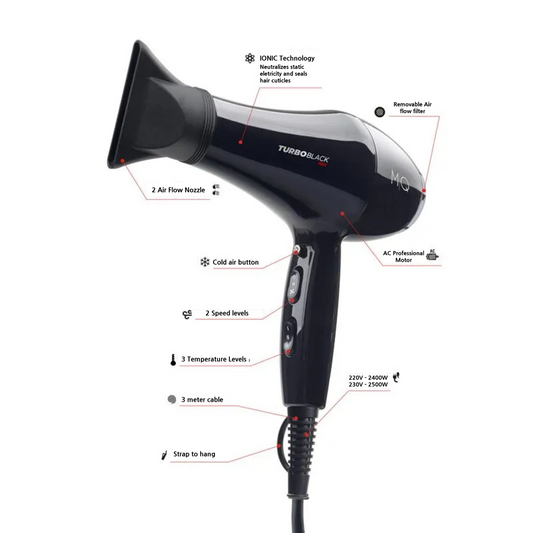
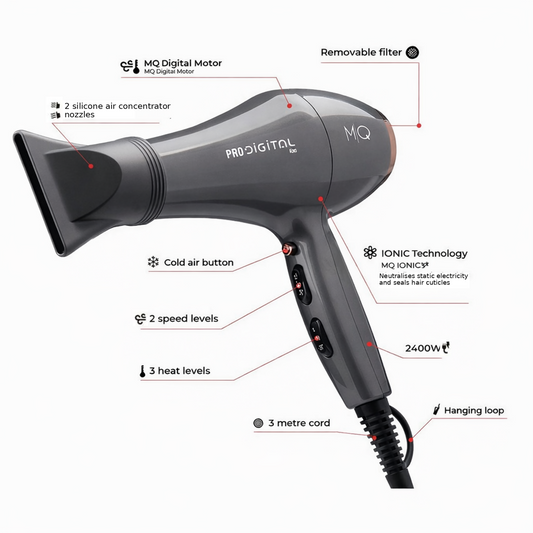
An ionic hair dryer works by emitting millions of negatively charged ions during the drying process. These negative ions interact with the positively charged water molecules present in wet hair, breaking them down into smaller particles that evaporate more quickly from the hair shaft.
The result is a dramatically faster drying time — often reduced by 30 to 50 percent compared to conventional dryers — along with a significant reduction in frizz, as the negative ions neutralize the static electricity that causes the hair cuticle to lift and scatter light irregularly.
Ionic dryers are particularly effective for thick, coarse, and frizz-prone hair types. The technology seals the cuticle, locks in moisture, and produces a smooth, glossy finish that is difficult to achieve with heat alone. The primary consideration for ionic dryers is that on very fine or flat hair, the cuticle-sealing effect can sometimes make the hair appear overly flat or limp — a factor that professional stylists must account for when selecting their tools.
What Is a Ceramic Hair Dryer?
A ceramic hair dryer uses ceramic heating elements — or ceramic-coated components — to generate far-infrared heat. Unlike conventional metal coils that produce intense, uneven heat from the surface of the hair, ceramic technology generates heat from within, distributing it evenly across every strand and penetrating gently into the hair shaft without causing localized hot spots.
This even heat distribution is what makes ceramic dryers the preferred choice for fine, delicate, color-treated, or heat-sensitized hair. The gentler, more consistent heat minimizes thermal damage, preserves moisture within the hair structure, and reduces the risk of over-drying — a common cause of brittleness, breakage, and color fade in chemically processed hair.
Ceramic dryers also produce a naturally smooth result, though their frizz-control performance is generally less aggressive than ionic technology. They excel at providing precise, controlled heat that skilled stylists can use to shape, smooth, and finish hair with accuracy.
Ionic vs Ceramic: The Key Differences at a Glance
Understanding the core distinctions between these two technologies helps professionals and consumers identify the right tool for each specific hair challenge:
- Drying speed: Ionic dryers dry hair faster by breaking down water molecules; ceramic dryers dry more gently with consistent, penetrating infrared heat
- Frizz control: Ionic technology offers superior frizz elimination by neutralizing static; ceramic technology reduces frizz through even, controlled heat distribution
- Hair type suitability: Ionic dryers excel on thick, coarse, and frizz-prone hair; ceramic dryers are ideal for fine, delicate, color-treated, and heat-sensitized hair
- Heat distribution: Ceramic provides uniform, gentle heat throughout; ionic produces high airflow with powerful ionization
- Finish quality: Ionic delivers high shine and a sealed, smooth cuticle; ceramic delivers a soft, natural finish with excellent hair health preservation
- Risk of damage: Both technologies are safer than conventional dryers; ceramic carries a lower risk of thermal damage for sensitized hair types
- Professional versatility: Advanced models combine both technologies for maximum performance across all hair types
Which Technology Is Better for Salon Professionals?
In a professional salon environment, the choice between ionic and ceramic technology is rarely binary. High-performance professional dryers increasingly combine both technologies within a single unit — delivering the speed and frizz-control power of ionic ionization alongside the even heat distribution and thermal protection of ceramic elements.
For professionals managing diverse clientele — from fine-haired clients requiring gentle heat to thick, curly-haired clients demanding fast, powerful drying — a professional-grade dryer that integrates both ionic and ceramic technology offers the most versatile performance. The ability to adjust airflow speed and heat settings in combination with these technologies gives the stylist complete control over the outcome for every client.
If you are building or upgrading a professional toolkit, exploring a curated selection of professional hair styling tools will help you identify the models that deliver the ideal combination of power, technology, and precision for high-volume salon work.
Which Technology Is Better for Damaged Hair?
For hair that has been compromised by chemical processing, bleaching, heat damage, or environmental stress, thermal protection is the top priority during blow-drying. In this context, ceramic technology has a clear advantage — its far-infrared heat penetrates gently and evenly without creating the intense surface heat that can cause further cuticle damage on already fragile strands.
That said, many professional-grade ionic dryers now incorporate advanced heat management systems and tourmaline coatings that significantly reduce thermal stress even at high temperatures. For an in-depth guide to selecting the safest and most effective tools for compromised hair, the best hair dryer for damaged hair guide provides a comprehensive breakdown of the top-performing models available in the current market.
Ionic vs Ceramic: The Drying Time Debate
One of the most frequently cited advantages of ionic technology is its significant reduction in drying time. In a busy salon handling high client volumes, every minute saved per appointment translates directly into increased revenue and improved scheduling efficiency. Ionic dryers consistently outperform ceramic-only models in raw drying speed, which is one of the primary reasons they dominate professional salon environments worldwide.
For home users, faster drying time also means reduced cumulative heat exposure — a meaningful benefit for anyone who blow-dries frequently and wants to minimize long-term thermal damage to their hair.
The Air Dry Alternative: When Not to Use a Hair Dryer
A complete understanding of hair dryer technology would not be possible without acknowledging when air drying might be the better choice. While both ionic and ceramic dryers offer significant improvements over conventional heat-only dryers, there are specific hair types and circumstances where reducing heat exposure altogether produces better long-term results.
For the definitive comparison between blow-drying and natural drying — and the science behind which method genuinely protects hair health — the expert guide on hair dryer vs air dry delivers a balanced, evidence-based analysis of both approaches.
Tourmaline: The Third Technology Worth Knowing
Many high-end ionic and ceramic dryers now incorporate tourmaline — a semi-precious gemstone ground into the heating elements or the dryer's internal components. Tourmaline naturally amplifies ionic output, generating up to six times more negative ions than standard ionic technology alone. This makes tourmaline-infused dryers particularly powerful for frizz control and shine enhancement.
When evaluating professional dryers, tourmaline ceramic and tourmaline ionic models represent the premium tier — combining multiple hair-protective technologies into a single, high-performance tool. These are the models most commonly found in top-tier salon environments and are increasingly sought after by discerning home users who want professional results without the salon visit.
How to Choose the Right Technology for Your Hair Type
The ideal hair dryer technology is determined by your hair's specific characteristics — not by brand marketing or price alone. Here is a practical framework for making the right decision:
- Thick, coarse, or frizz-prone hair: Prioritize ionic or ionic-ceramic combination dryers for maximum frizz control, faster drying, and high shine
- Fine or flat hair: Opt for ceramic technology to avoid over-flattening; look for models with variable heat and speed settings for precision control
- Color-treated or bleached hair: Choose ceramic or tourmaline ceramic dryers that deliver gentle, even heat to preserve color vibrancy and cuticle integrity
- Curly or wavy hair: Ionic-ceramic combination dryers with a diffuser attachment offer the best results — controlling frizz while preserving natural curl definition
- Heat-sensitized or chemically processed hair: Ceramic technology with adjustable temperature settings and a cool-shot function provides the safest, most controlled drying experience
Frequently Asked Questions
Is an ionic hair dryer better than a ceramic hair dryer?
Neither technology is universally superior — each excels in different contexts. Ionic dryers are better for thick, frizz-prone hair requiring fast drying and high shine. Ceramic dryers are better for fine, delicate, or heat-sensitized hair requiring gentle, even heat. The highest-performing professional models combine both technologies for versatility across all hair types.
Can I use an ionic hair dryer on color-treated hair?
Yes, ionic dryers are generally safe for color-treated hair. However, for heavily processed or bleached hair, a ceramic or tourmaline ceramic dryer that distributes heat more gently is typically the safer choice. Always use a heat protectant regardless of dryer technology.
Do ionic hair dryers cause hair damage?
Ionic dryers are significantly safer than conventional heat-only dryers. By accelerating drying time, they actually reduce cumulative heat exposure. However, using any dryer at excessively high temperatures without heat protection can cause damage regardless of the technology used.
What does ceramic mean in a hair dryer?
In a hair dryer, ceramic refers to the use of ceramic material in the heating elements — either as pure ceramic plates or as ceramic-coated components. Ceramic generates far-infrared heat that penetrates the hair gently and evenly, reducing the risk of hot spots and thermal damage compared to conventional metallic heating elements.
Is it worth investing in a professional ionic ceramic hair dryer?
For both salon professionals and frequent home users, yes. Professional ionic ceramic dryers deliver faster drying times, superior frizz control, greater durability, and better long-term hair health outcomes than consumer-grade alternatives. The investment pays off through improved results, reduced styling time, and significantly reduced thermal damage over time.